
 Image 1 of 3
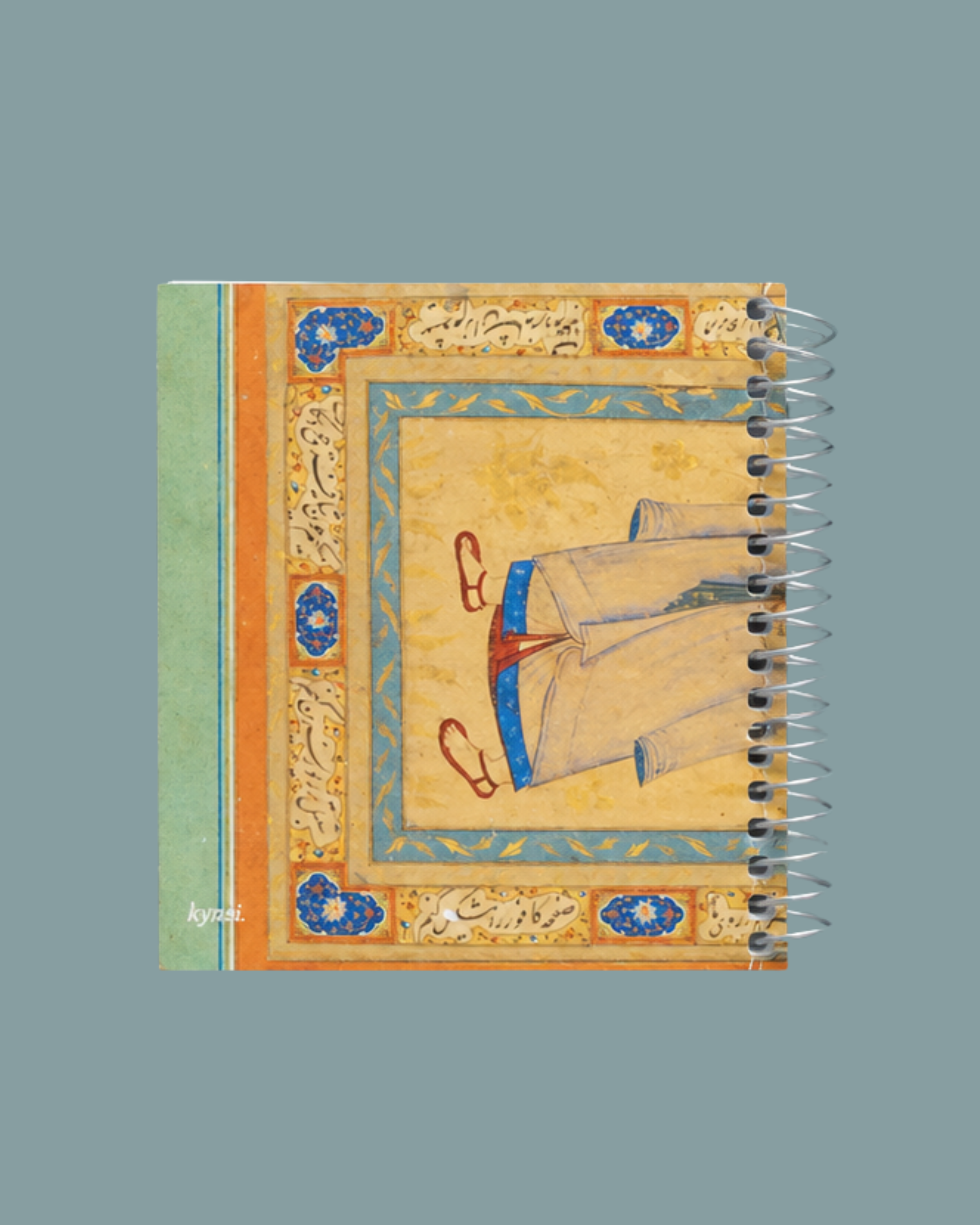 Image 2 of 3
 Image 3 of 3
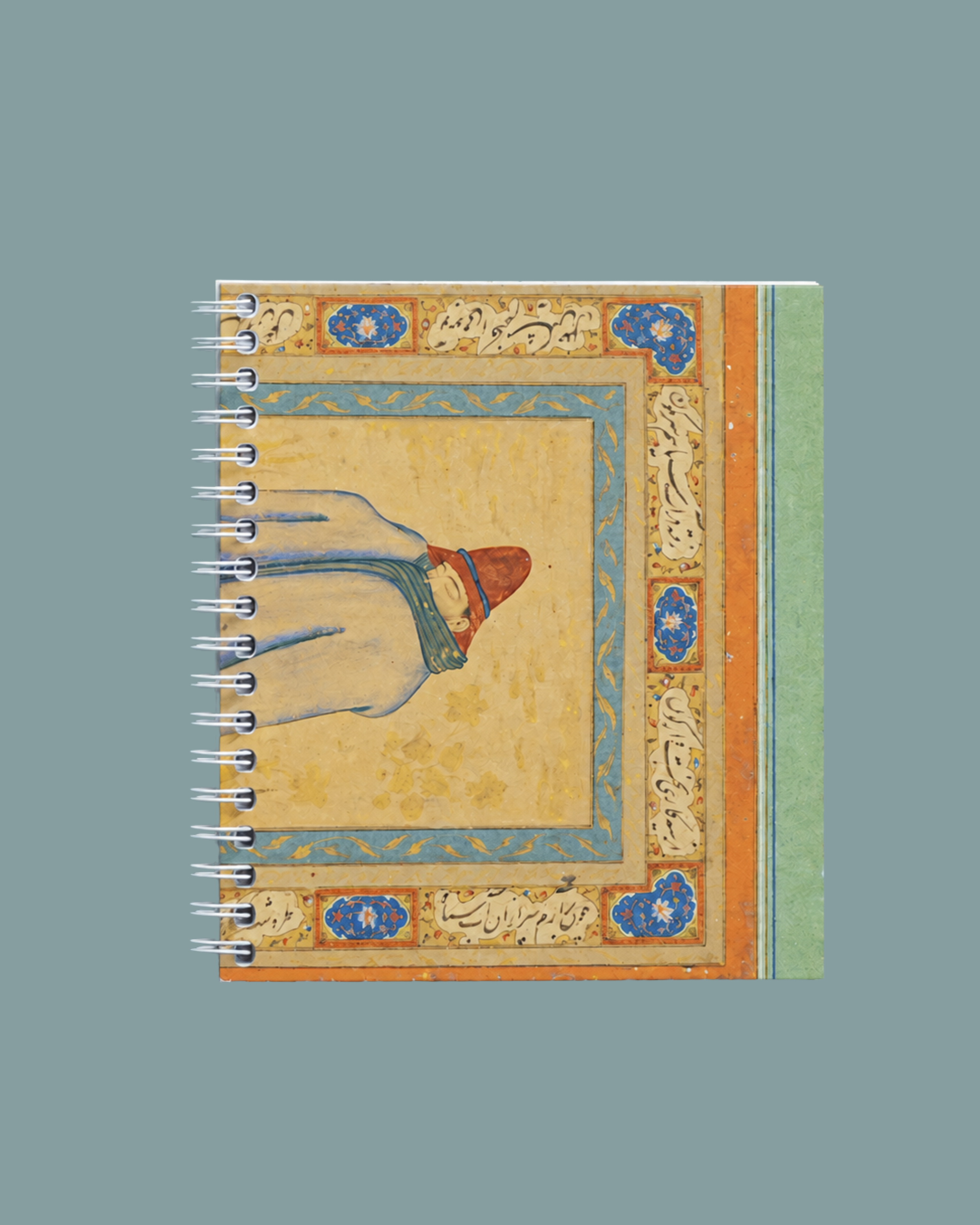
Draped in a blue khirqa, a cloak worn by Sufis, characterised by extremely long sleeves, a dervish stands engaged in a thoughtful demeanour. His garment is one with a special meaning, awarded to a member of the Sufi order after fter several years of initiation. It acknowledges that he is a link in the silsilah (chain) of divine knowledge, originating with the Prophet Muhammad.
In nastaʿliq script, the inscription around the outside is by the mystical poet Jalal al-Din Rumi (13th century CE) known as Maulana. It is closely related to Sufi thought.
The entire poem, including the missing parts, states that human beings are like pens in God's hand and, without His will, are lifeless; with His will, they are full of life [and can achieve anything]. This concept can be interpreted as a form of Determinism. The word "siyah" (black) in this poem refers to bad fortune and to human destiny after the banishment of Adam and Eve from heaven, which ultimately led to their fall and brought about human suffering.
Notebook
Pages: White, Unruled
Dimensions: 12.5 × 12.5 cm (Approximation)
Please note that, as the notebooks are handmade, the dimensions of each product vary slightly
Design
Date: Late 16th–early 17th century
Geography: Attributed to Iran
Medium: Ink, opaque watercolour, and gold on paper
Draped in a blue khirqa, a cloak worn by Sufis, characterised by extremely long sleeves, a dervish stands engaged in a thoughtful demeanour. His garment is one with a special meaning, awarded to a member of the Sufi order after fter several years of initiation. It acknowledges that he is a link in the silsilah (chain) of divine knowledge, originating with the Prophet Muhammad.
In nastaʿliq script, the inscription around the outside is by the mystical poet Jalal al-Din Rumi (13th century CE) known as Maulana. It is closely related to Sufi thought.
The entire poem, including the missing parts, states that human beings are like pens in God's hand and, without His will, are lifeless; with His will, they are full of life [and can achieve anything]. This concept can be interpreted as a form of Determinism. The word "siyah" (black) in this poem refers to bad fortune and to human destiny after the banishment of Adam and Eve from heaven, which ultimately led to their fall and brought about human suffering.
Notebook
Pages: White, Unruled
Dimensions: 12.5 × 12.5 cm (Approximation)
Please note that, as the notebooks are handmade, the dimensions of each product vary slightly
Design
Date: Late 16th–early 17th century
Geography: Attributed to Iran
Medium: Ink, opaque watercolour, and gold on paper