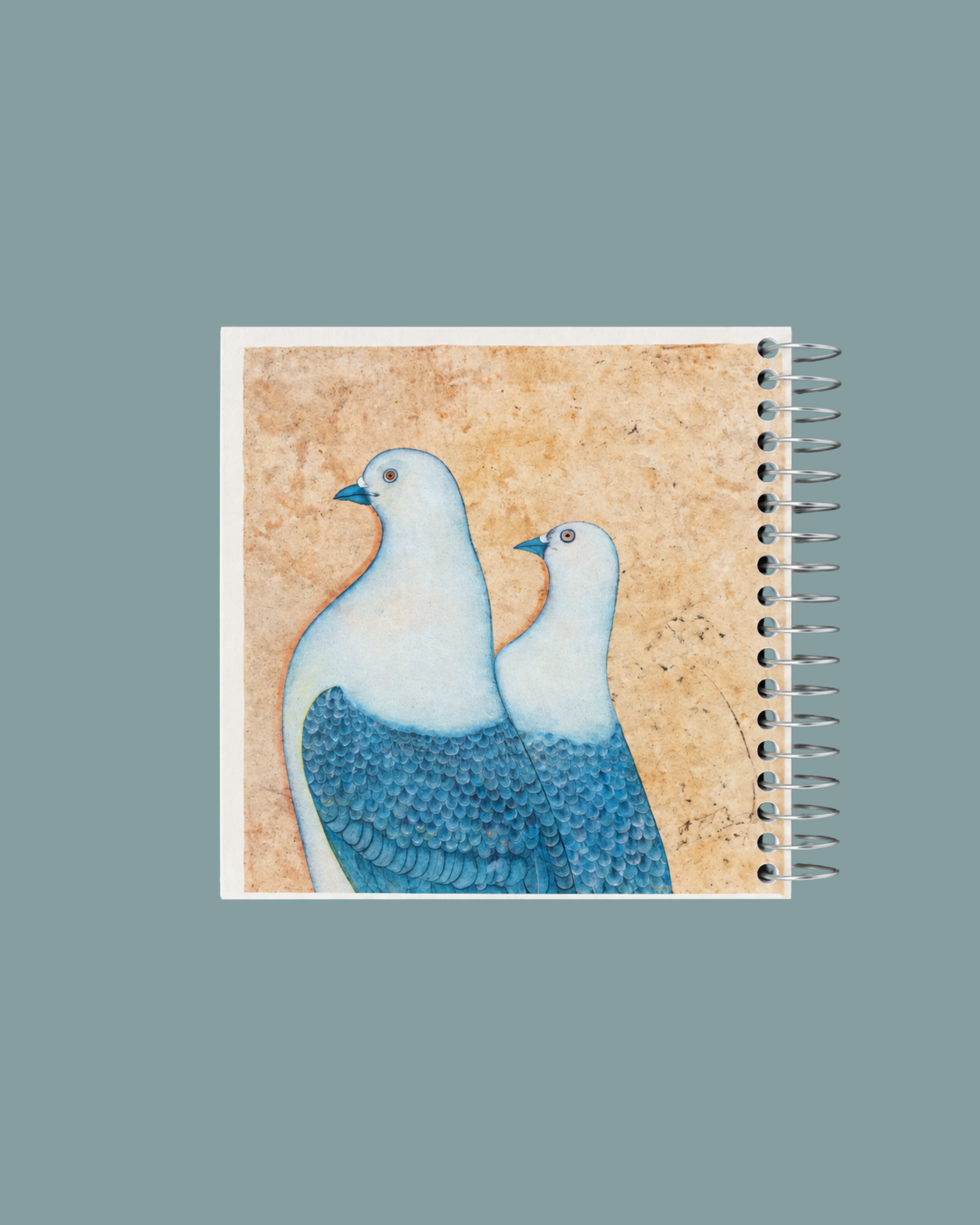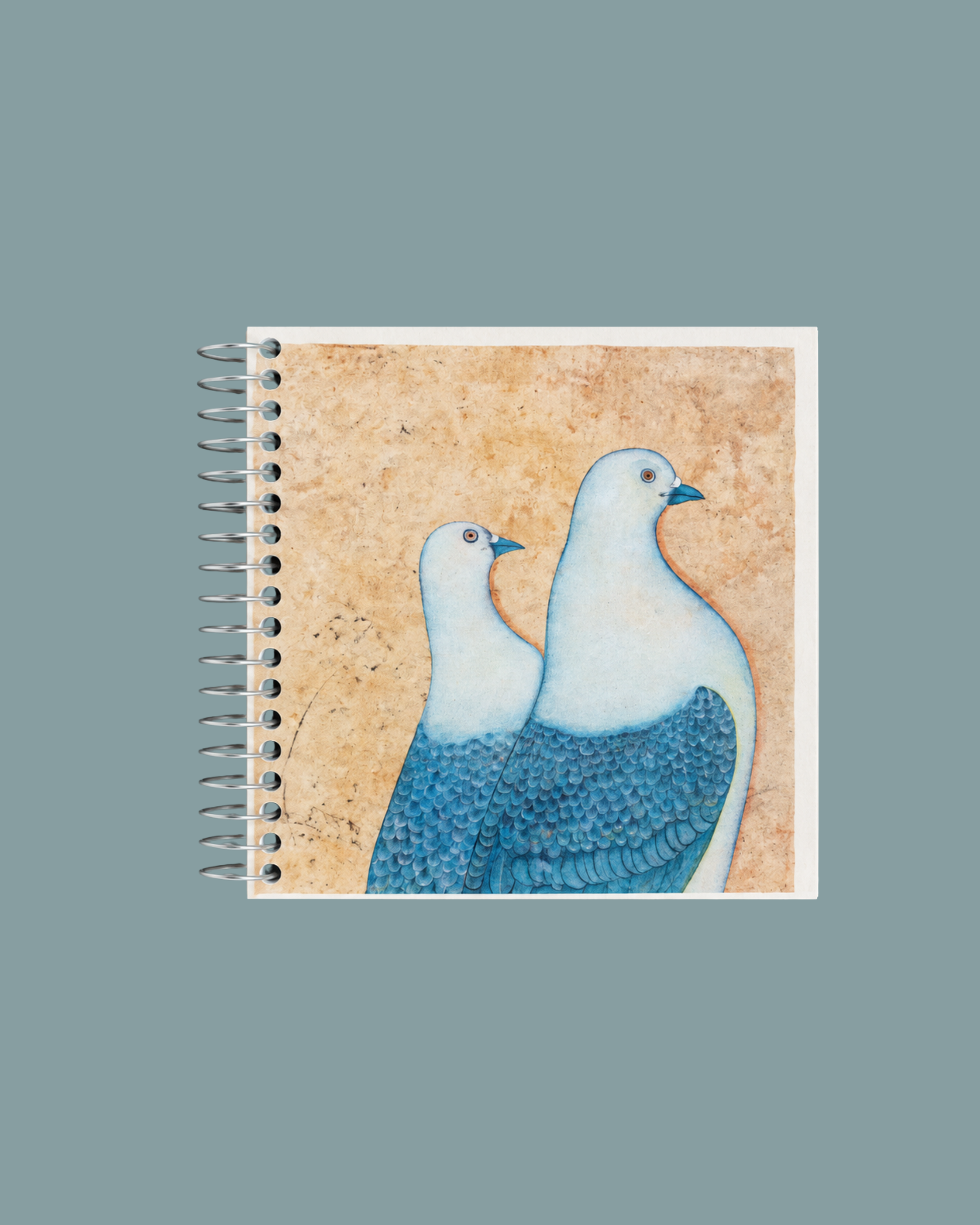
This print is based on a seventeenth-century Mughal painting documenting the natural world of India. Mughal emperors were known for commissioning detailed studies of the people, plants and animals around them. Two Pigeons forms part of this wider tradition of observing and recording the natural world at court. The pigeon on the left wears two golden anklets, suggesting that the birds may have belonged to the imperial household.
Notebook
Pages: White, Unruled
Dimensions: 12.5 × 12.5 cm (Approximate)
Please note that, as the notebooks are handmade, the dimensions of each product vary slightly
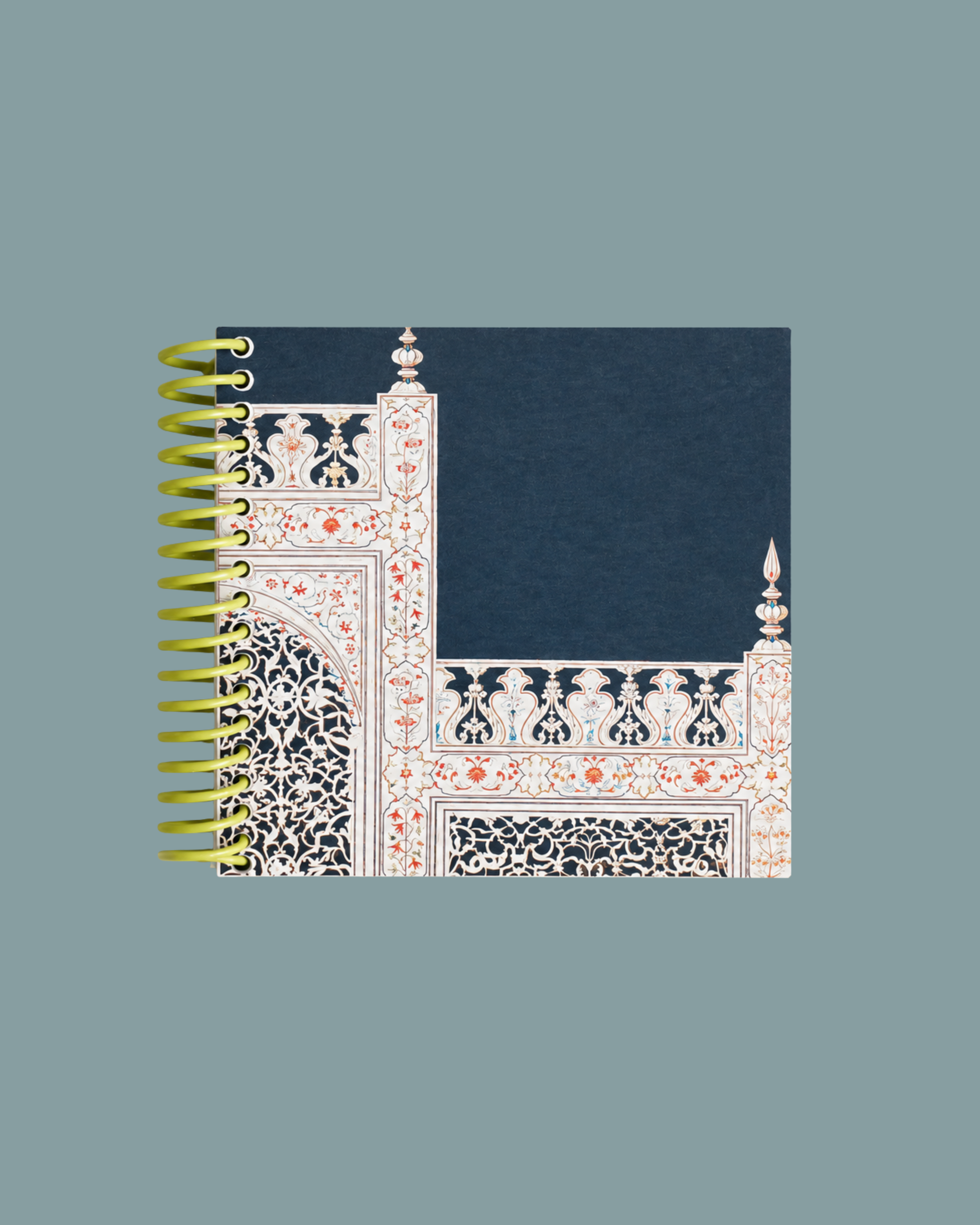
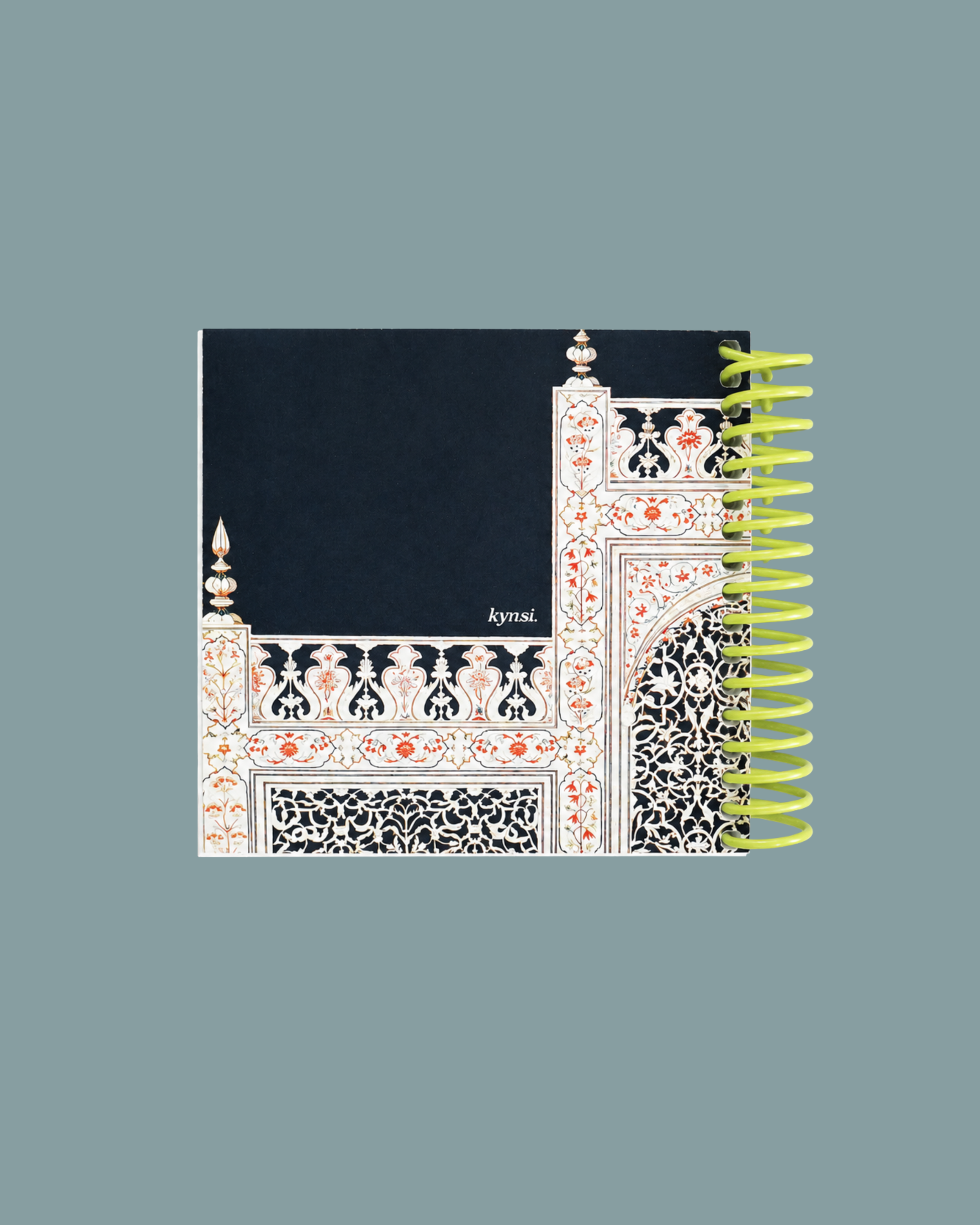
This print is taken from an early nineteenth-century study of the intricate jali screen at the heart of the Taj Mahal, surrounding the cenotaphs of Mumtaz Mahal and Shah Jahan. Its delicate floral and geometric detailing captures the beauty and craftsmanship of Mughal design, making it a timeless piece for a contemporary interior.
Notebook
Pages: White, Unruled
Dimensions: 12.5 × 12.5 cm (Approximate)
Please note that, as the notebooks are handmade, the dimensions of each product vary slightly
Date: c. 1810–1820
Made in: Agra, India
Notebooks
Handcrafted notebooks featuring some of our favourite prints
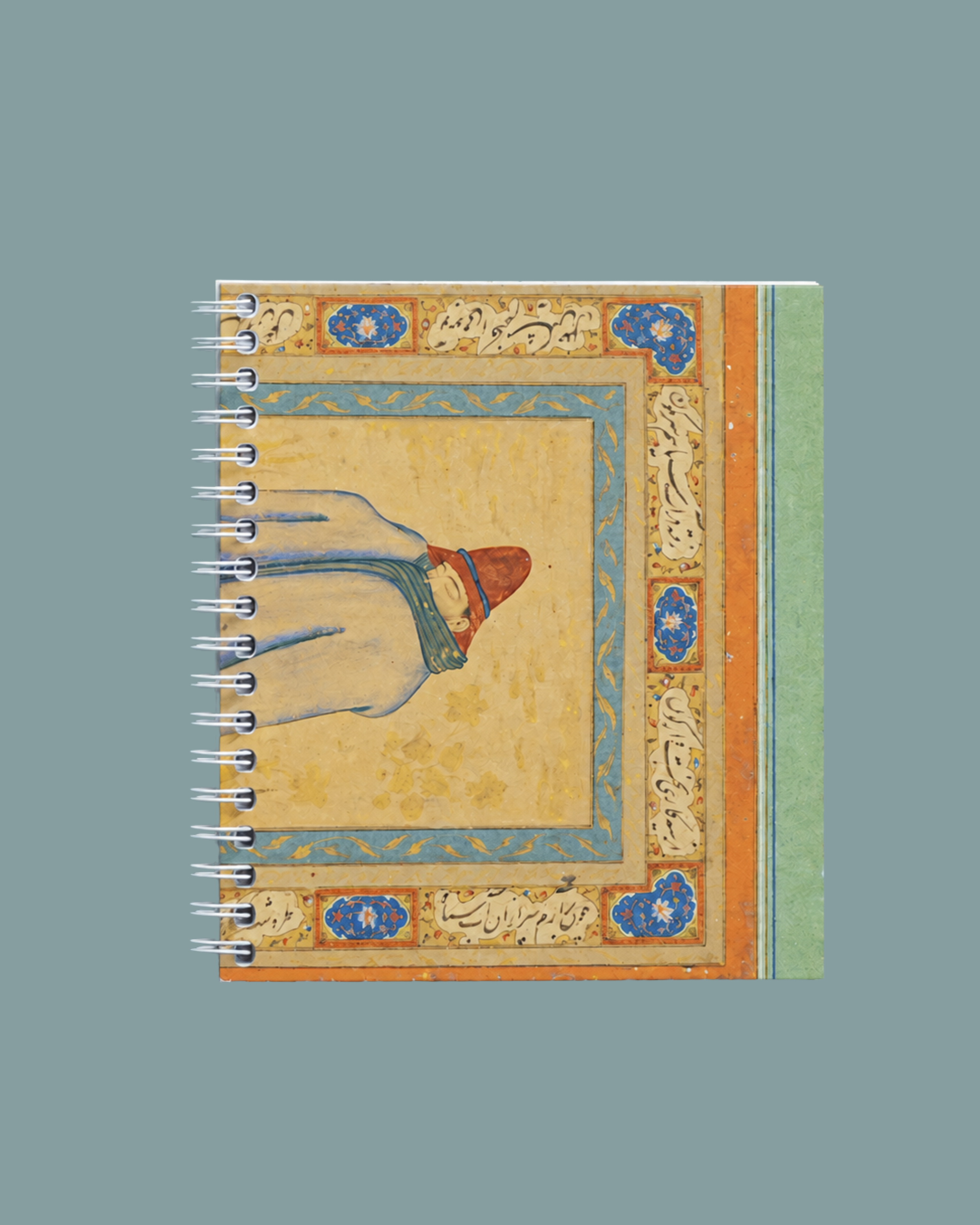
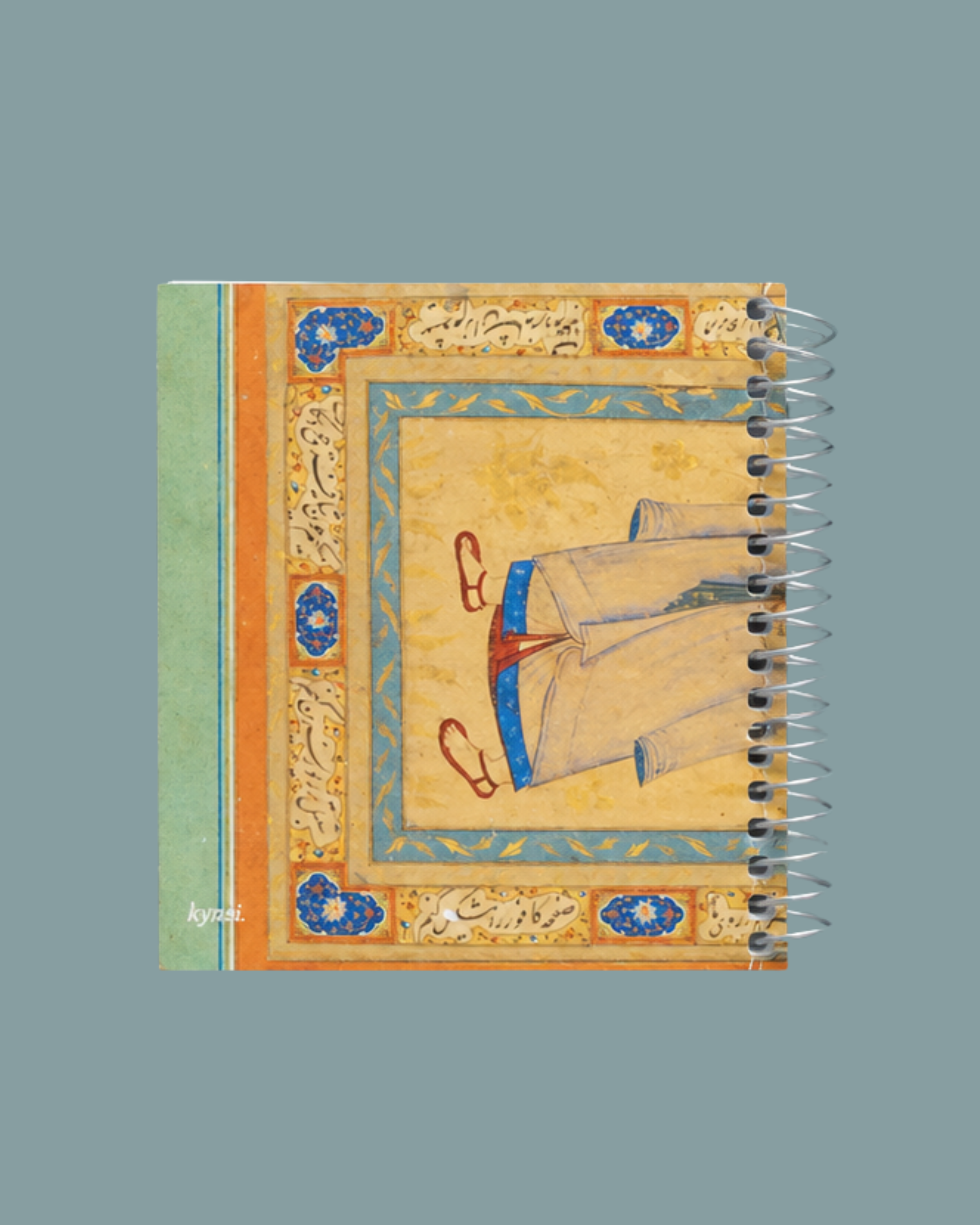
Draped in a blue khirqa, a cloak worn by Sufis, characterised by extremely long sleeves, a dervish stands engaged in a thoughtful demeanour. His garment is one with a special meaning, awarded to a member of the Sufi order after fter several years of initiation. It acknowledges that he is a link in the silsilah (chain) of divine knowledge, originating with the Prophet Muhammad.
In nastaʿliq script, the inscription around the outside is by the mystical poet Jalal al-Din Rumi (13th century CE) known as Maulana. It is closely related to Sufi thought.
The entire poem, including the missing parts, states that human beings are like pens in God's hand and, without His will, are lifeless; with His will, they are full of life [and can achieve anything]. This concept can be interpreted as a form of Determinism. The word "siyah" (black) in this poem refers to bad fortune and to human destiny after the banishment of Adam and Eve from heaven, which ultimately led to their fall and brought about human suffering.
Notebook
Pages: White, Unruled
Dimensions: 12.5 × 12.5 cm (Approximation)
Please note that, as the notebooks are handmade, the dimensions of each product vary slightly
Design
Date: Late 16th–early 17th century
Geography: Attributed to Iran
Medium: Ink, opaque watercolour, and gold on paper
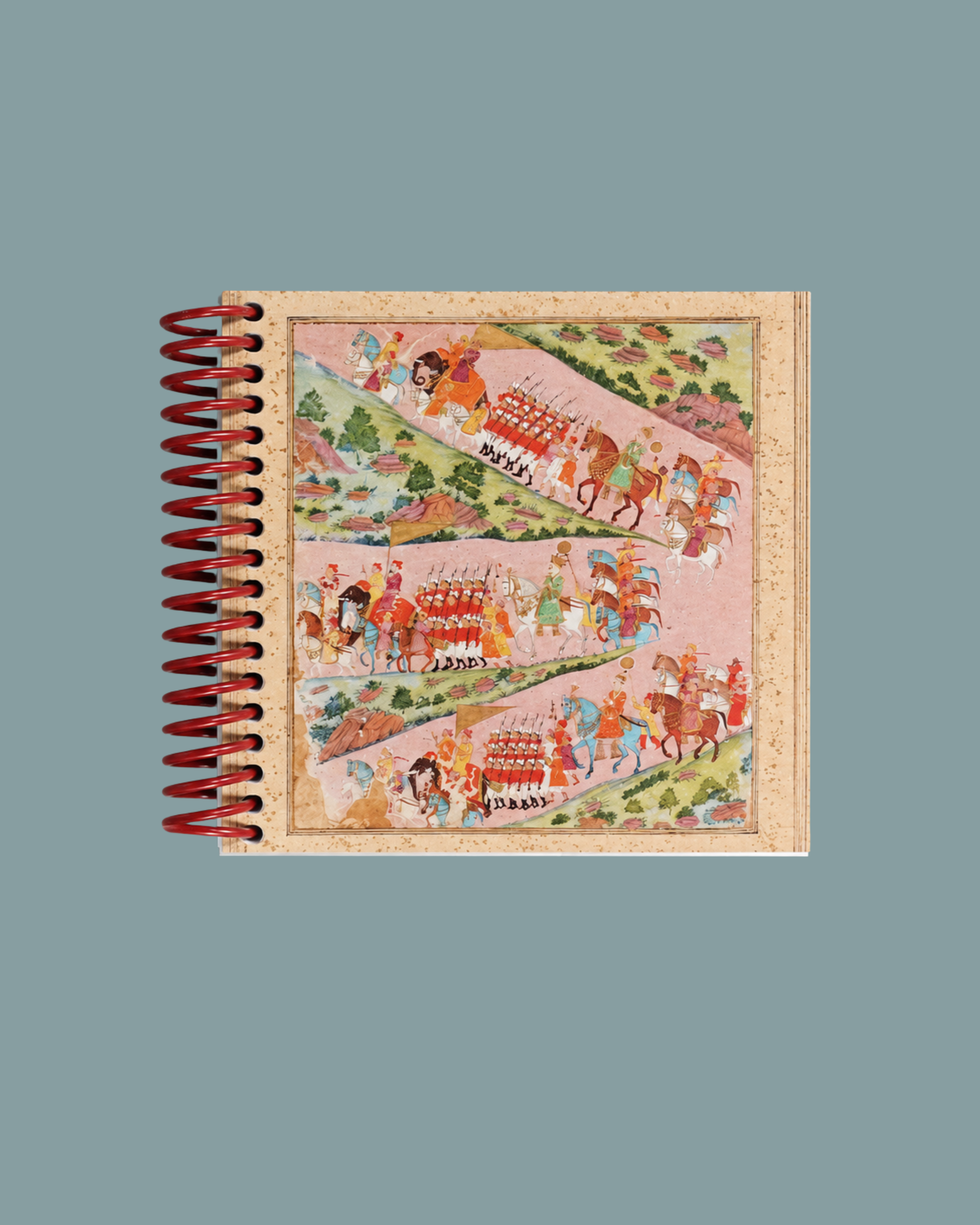
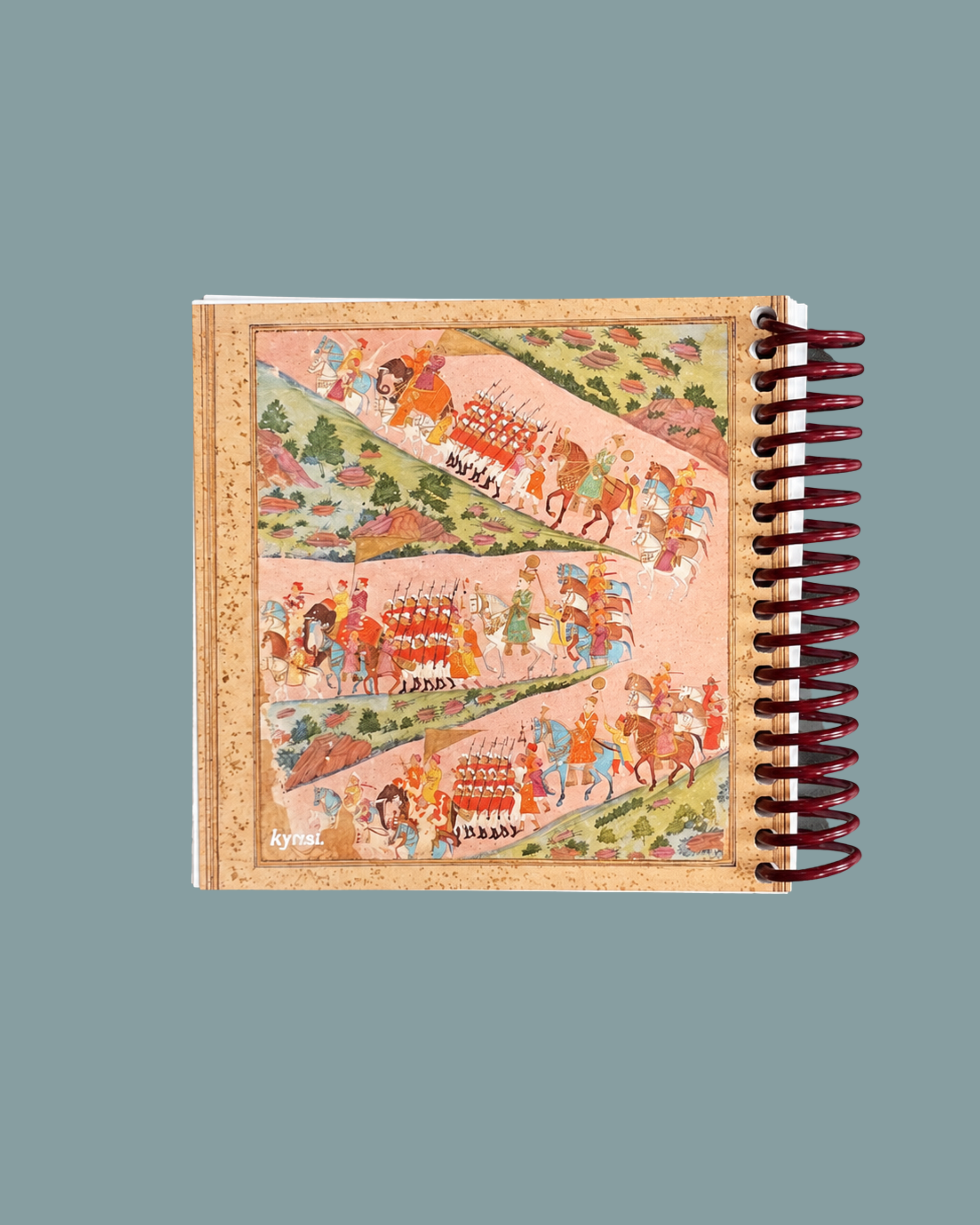
A richly detailed painting from nineteenth-century Hyderabad, showing a royal or military procession moving along three winding roads. he work reflects the tradition of Indian court painting, where processions, ceremonial life and the world of the court were carefully documented.
Notebook
Pages: White, Unruled
Dimensions: 12.5 × 12.5 cm (Approximate)
Please note that, as the notebooks are handmade, the dimensions of each product vary slightly
Date: c. 1840
Culture: India, Hyderabad
Medium: Ink and opaque watercolor on paper